Your First Song Is a Handshake, Not a Victory Lap

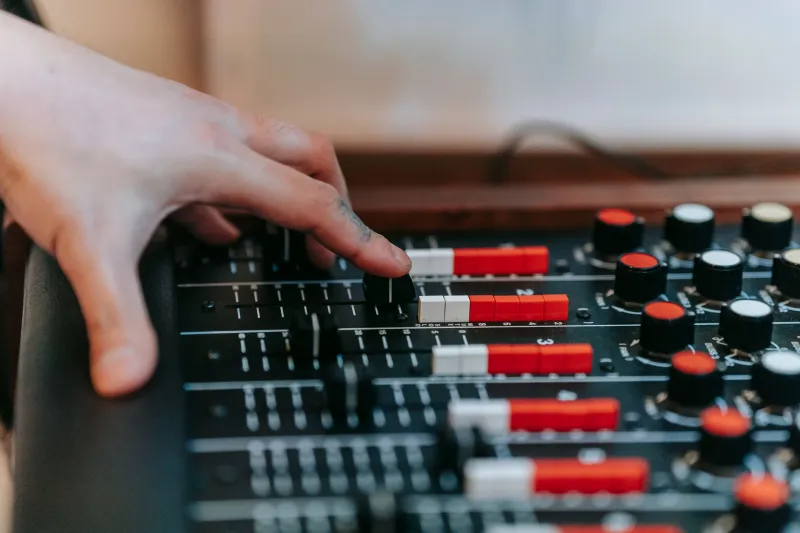
Photo: Highlightwiki, CC0, via Wikimedia Commons
I used to treat the first song like a finale. Lights low, amp humming, and I would kick the door down with the biggest, fastest, hookiest thing I had. Why not? It was the best song. It was the one people knew. It was the one that made the room go, oh, this guy is serious.
Except the room rarely went oh. More often it went, huh? People were still taking off their coats. The bartender was still counting the tip jar. A guy near the front was still asking his friend whether the show was free. I was performing a victory lap before anyone had agreed to run the race.
The Night a Ballad Almost Cleared the Room
A few years back, I played a small club in the Midwest on a Thursday. Weather was garbage, crowd was late, and I was trying to be clever. I opened with a slow, fingerpicked tune I loved. It was pretty. It was also a mistake. By the second verse, I could feel the energy leaking out of the room like air from a tire. People were not hostile. They were just not with me yet. I had asked them to sit still before I had earned the right to ask them for anything.
I salvaged it by cutting the third verse and going straight into a louder song, but the damage was done. The rest of the set was fine. The room never fully came back. That night taught me a rule I have mostly followed since: the opener is not the best song. The opener is the handshake.
Opening Songs Do a Different Job
A great album opener can be a statement. A great live opener has to be a welcome. It has to say, here is who we are, here is the temperature, and here is why you should stay. That means it needs three things: clarity, motion, and a little room to breathe.
Clarity because the sound is still settling. Motion because a standing crowd needs a reason to stop checking its phone. Room to breathe because you do not want to blow your best chorus before the people in the back have found a spot. I usually start with something mid-tempo and direct, a song with a clear groove and a hook that shows up early. Not the anthem. Not the ballad. The one that makes the room lean forward a half inch.
Sequence Tension, Not Just Volume
The old version of me thought a setlist was a volume knob: loud, louder, loudest, acoustic, done. That is not a set. That is a tantrum with a capo. A better set moves through tension and release. It lets the crowd get comfortable, then makes them a little uncomfortable, then gives them something to hold onto.
I like to think of the first third as a conversation. You are introducing yourself. The middle third is where you can take a risk: the deep cut, the weird one, the song that starts with a story. The last third is where you cash in the goodwill you have built. That is where the big songs go, not because they are the best, but because the room has earned them with you.
The Slow Spot Has to Be Earned
I am not anti-ballad. I am anti-surprise-ballad. If you are going to bring the room down, tell them why. Put the slow song after a loud one, not after the opener. Give it a reason to exist in the set, not just on the record. And for the love of everything holy, do not put it second. The second song is still part of the handshake. It is the moment people decide whether they are staying or going to get a drink.
The slow spot works best when it feels like a secret, not a speed bump. In a small club, you can almost see the room change posture. People stop talking. They lean in. That only happens if you have spent the first half of the set earning their attention. You cannot borrow it. You have to buy it with sweat and a couple of good choruses.
Stop Confusing Your Favorite Song With the Right Song
I have made this mistake too many times. The song I am most proud of is not always the song that belongs at number one. Sometimes it is a closer. Sometimes it is a mid-set left turn. Sometimes it should not be in the set at all. That last one stings, but it is true. A live show is not a archive dump. It is a room full of people who decided to leave their houses.
When I build a set now, I write the songs on index cards and spread them across the floor. Then I ask one question: what does the room need next? Not what do I want to play next. What does the room need. That usually means a little more motion, a little less explaining, and one fewer song than I planned.
The Test Is the First Three Songs
If you want to know whether your setlist works, record the first three songs from the crowd, not the stage. Watch the faces. Are people turning toward you or toward each other? Are they nodding or checking the time? Are they still holding their coats? The first three songs are not about you. They are about whether the room has decided to come with you.
I still love a big opening. I just do not confuse big with best. The best song can wait. The handshake cannot. Get them leaning in first. Then you can take them anywhere.